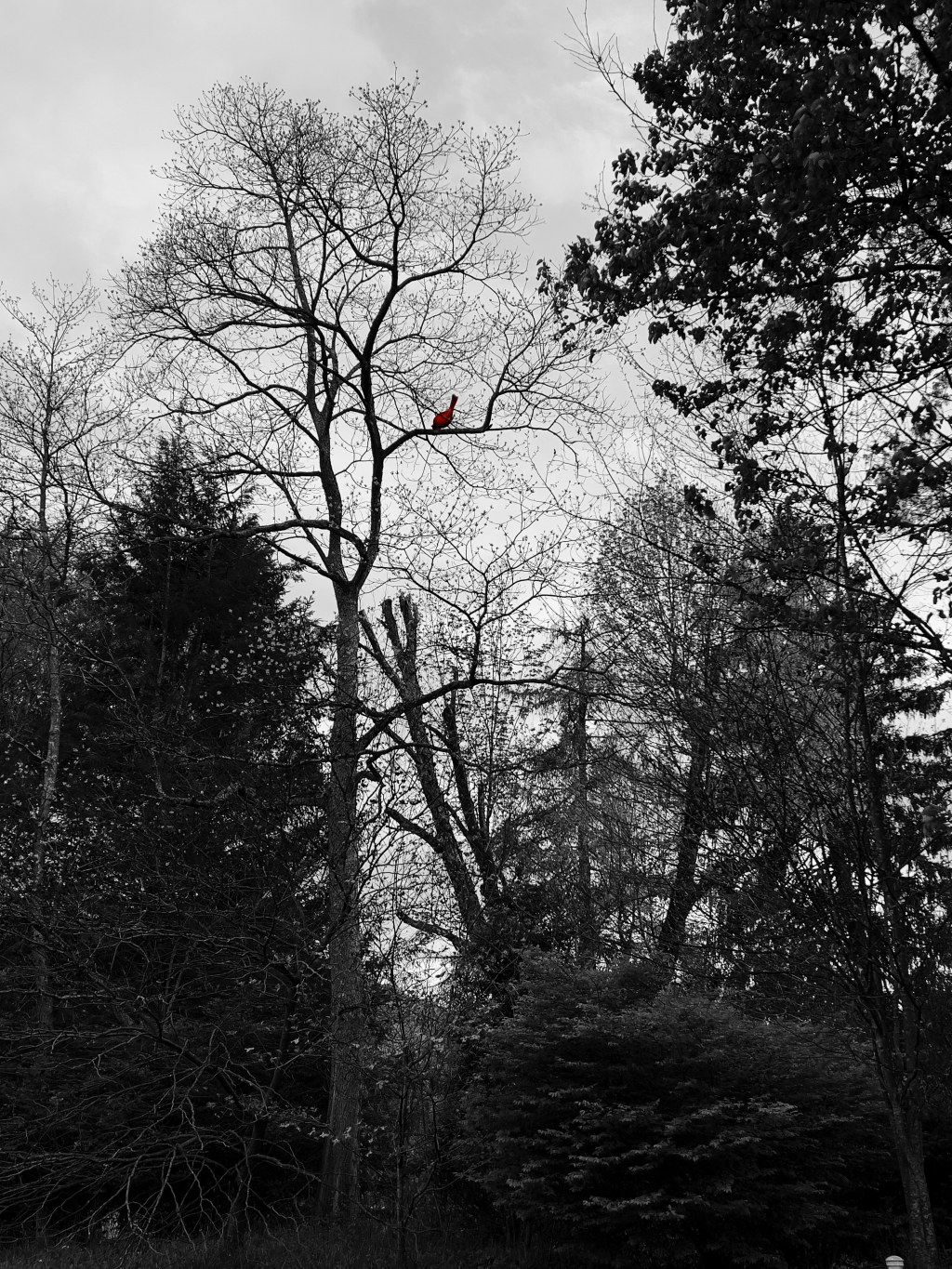
A narrative poem in iambic trimeter from my upcoming book,
“Coins: Tall Tales from Meager Monies”
__________________________________________________________
Near acres green and brown
With Fall leaves falling down;
Where wind blows softly through
The grass still wet with dew.
The red and orange skies,
Which light up overhead,
Proclaim the new sun’s rise
To wake all but the dead.
In twilight’s dawning sun
A witch was all but done
With finishing her spell
By candle, scroll, and bell.
She dug the hole by hand,
And placed the seed inside.
Then covered it with land,
And watered ‘round each side.
Then scroll she did unwind,
And bell then she did chime,
And candle she did light,
And spell she did recite,
“Oh, waking spirits,
Do lend me your ears;
Now hear my lyrics
To grant me more years.
For as this tree breathes,
So shall my heart beat,
And as its roots hold,
I shall not grow old.
Let this tree make real
The hopes of who comes;
Whatever they will,
Let it soon become.
Grant what they’re wishing,
Of things they’re dreaming,
Give them their desires
As it grows higher.
And drawing out life
From loves who loved well
For me to imbibe
Forever, until.”
With now the spell complete
And spirits put to sleep,
The witch pulled on her hood,
And ran back to the woods.
As seasons changed year ‘round
And rain turned into snow,
The roots grew slow through ground
As days would come and go.
Till 1693,
As flowers bloomed in Spring,
And birds began to sing,
And bees began to sting.
In New England’s Yorktown,
Which, Chartered by the Crown,
Was growing fast and sound
As people broke new ground.
It was within this time
When boy and girl locked eyes
Across a busy street
As both hearts skipped a beat.
Her hair was chestnut brown,
And skin looked marble smooth.
In her gaze he could drown.
He froze, and could not move.
A smile then took the lips;
The lips he dreamed to kiss.
As she turned to depart,
It pained him in his heart.
He saw her turn away.
His head was filled with fear.
He ran to her, and prayed
That she might lend her ear.
“Before I saw your face
My heart’s been dead in place,
But it would die again
If you could not say when
I shall be blessed to take
You with me for a time,
And if it is our fate,
Your hand inside of mine.”
By then her smile did fade,
And his joy then decayed.
He quickly lost all hope
As she turned ‘round and spoke,
“Regrettably, I must
Deny your sweet advance.
It pains me, Sir, do trust,
To not give you the chance.
For I promised to wed
A man who’s fought and bled
In mud and blood and more
For our King William’s War.”
So with one parting gaze
She walked out of his sight;
Forever parting ways,
Forever out his life.
While watching this transpire
The witch thought to conspire
A way to feed her tree
And stop her feeling weak.
Her powers as of late
Were draining very low;
And so she sought to make
Her magic oak tree grow.
“A shame how cruel love is,
You never get, but give,
And give all that you can.”
The witch said to the man.
“Can I escape this rope
And gallows made of love
Or is my only hope
In shifting stars above?”
“Though shifting stars I know,
‘Tis not the route I’d go;
For I know surer ways
That wishes can be made.”
“Then tell me, Miss, how might
One use this magic charm?
For I’ll pay any price
To hold her in my arms.”
“Outside of town you’ll find
A tree line well defined.
In hiking through the leaves
You’ll find a special tree.
If at this tree you wish,
Then your wish will come true,
And your true lover’s kiss
Will find her way to you.”
So come sunset they went,
And in the forest spent
Much night by torches light
As they performed the rite.
“Now dig yourself a hole,
And bury one gold coin.
For all must pay the toll
To spirits they enjoin.”
Then kneeling there beside,
He clasped his hands, and cried.
His tears watered the roots
To nourish a new fruit.
“I’m wishing that she
Could love me so, too.
Forever could we
Be loving and true.
Never to depart
From one other’s heart;
But bolden and brave,
And bound to the grave.”
With now the wish full made,
The witch did part a smile
She told him, “Now we wait;
For love may take a while.”
Though not but two days passed
When love did come at last;
And knocking on his door
Was her that he adored.
With no ring on her hand
And flowers in her hair,
She greeted, and began
To tell what brought her there.
A battle had been lost,
With soldiers’ lives the cost.
Though frontline news was grim,
It was good news to him.
And not long after this
They were made groom and bride;
Then with true love’s first kiss
Pronounced as man and wife.
Their life was good, although,
The roots still rooted slow.
Then Summer’s fruits did grow
With evil that was sowed.
And in Fall came the reap
Of envy, pride, and hate;
And jealousy did creep
Into a love once great.
And soon the fights began.
He’d blame, and he’d demand;
He’d scream, and he’d accuse,
And call her love untrue.
So every night she’d cry;
For she did not know how
To prove her love no lie
But to swear and avow.
But he could not believe,
And so each night he’d leave
To water round the tree;
And his wish he’d repeat.
Until one day he read
A letter in her drawer
From whom she almost wed
That died during the war
He showed what he obtained,
And she tried to explain,
“This letter is the last
I got before he passed.
It’s all I have from him.
We never spoke again.
And though I loved him then,
It’s you that I am with.”
Though words don’t cut through bark,
These words did light a spark
Which envy turned to flame
That no water could tame.
“You must think I’m dumb
To tell such a lie.
But I won’t succumb
To hearing your cries.”
“Then I’ll throw it away
If that is what it takes.
I swear to All Above
That you’re the man I love.”
Though trying to defend,
Her truth could do no good.
Her love could not make bend
A heart now hard as wood.
Then by her hair he grabbed,
And with a knife he stabbed.
She tried to scream his name;
He killed her just the same.
He took her to the tree,
And by the roots he dug
A hole near six foot deep,
Which fit her nice and snug.
But as be placed the dirt,
His heart began to hurt;
As he looked on her face,
He saw his great mistake.
He threw the shovel down,
And climbed his way inside.
He brought her above ground,
And held her till sunrise.
As townsfolk came alive
To start their chores outside,
The man came to admit
His awful, awful sin.
Emerging from the trees
A ripped and tattered mess,
With mud stains on his knees,
And blood stains on his chest.
The people from the town
Gave pause, and gathered ‘round.
With everyone ahead
He stopped, and to them said,
“Let it be known
My mind was poisoned here;
Though no excuse
For what my hands have done.
It was not me,
I was not thinking clear.
Though this be true,
For mercy I ask none.
I’ve snuffed the flame
That warmed my frozen heart
With shadows
From a dark and evil place.
From one wish there
Did all this madness start.
The oak tree caught my mind
With its embrace.
Inside the trees
You’ll find a six-foot grave.
Inside of it
You’ll find my murdered wife.
Let me assure you that
She can’t be saved.
I held her tight,
And stabbed her with this knife.
I only ask
You all to find my bride,
And take me there
To bury me beside.”
With tears inside his eyes,
And all his words now said,
He stabbed himself three times,
Collapsed, and fell down dead.
The town was all in awe
At what they had just saw,
But honored his request,
And buried them abreast.
Some people tried to burn;
Some tried to cut it down,
But each were killed in turn
While roots held firm in ground.
Although the oak still grows,
Its secret is well known.
Since it would not tear down
They left it up, but now,
Everybody knows
Not to ever go
Wishing at the oak.
Dear reader,
I have become a fan of the murder ballad since being first introduced to the concept by Jimmy Hendrix’s performance of “Hey Joe” and Johnny Cash’s cover of “Cocaine Blues” from the infamous Folsom Prison album. These are the first examples I can distinctly remember, but I likely heard many before knowing the theme had a name. Turns out, murder ballads are everywhere- from rock to blues to country; hip-hop, pop, and almost every other style of music. While it has its roots in Old World folk music, it continues to be a popular storytelling mechanic across genres and generations even today with songs like “Kill Bill” by SZA on her 2022 album SOS or “Gunpowder and Lead” from Miranda Lambert’s 2008 album Crazy Ex-Girlfriend. These songs continue a tradition going back hundreds of years, and connect us all by the universal emotional weight we give to concepts such as death, justice, and love.
Once I learned how prevalent the murder ballad is in Appalachian folk music, I became inspired to write one of my own. I have also always been fascinated by metered poetry, particularly the use of iambic pentameter by great English playwrights such as Shakespeare and Marlowe; as well as later experimentations with the concept by Dickinson, Tennyson, Blake, and Browning. I am always surprised by how a poet’s use of meter often makes their words flow more naturally. It seems counterintuitive that such rigid syllabic structures would create the smoothest prose.
I find it endlessly entertaining to explore these structures in my writing. It’s almost like solving a crossword or sudoku puzzle where one must constantly make small adjustments and changes until every word fits exactly as it should. I think everyone should give this a try because it adds so much meaning to every word, and finishing each line feels like an accomplishment in itself!
Writing “Wishing at the Oak” in iambic tri-meter while copying Shakespeare’s style of changing the number of syllables in a line to denote differences in person and mood turned this rather short work of less than 1,500 words into a labor of love that I continue to edit even over a decade later. This exercise only made me respect and appreciate my favorite writers even more.
The closing monologue by the protagonist in sonnet form is easily my favorite part. It came about after the poem was already complete, but I wasn’t ready to let it go- so I added another Shakespearean element just because I wanted an excuse to not call it done quite yet.
I hope you have enjoyed reading this as much as I enjoyed writing it.
 Harrison Davidson Books